Building Sound Collectives in Helsinki

Building Sound Collectives has been selected for the Conference “CULTURE(S) IN SUSTAINABLE FUTURES: theories, policies, p􀀀ractices”, Helsinki, May 6 – 8 2015.

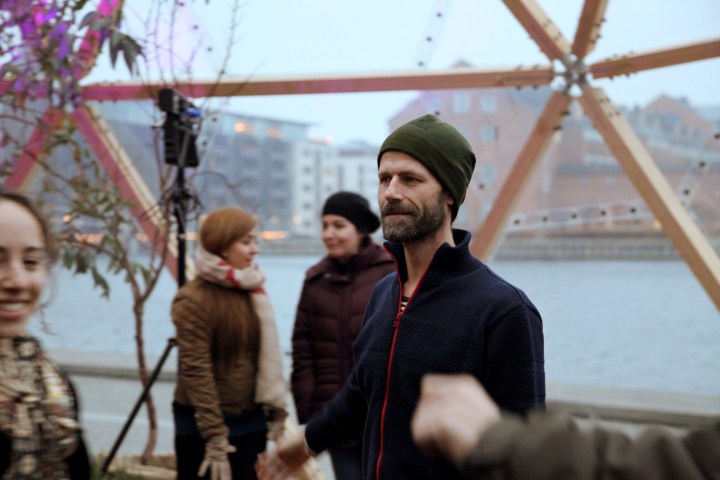
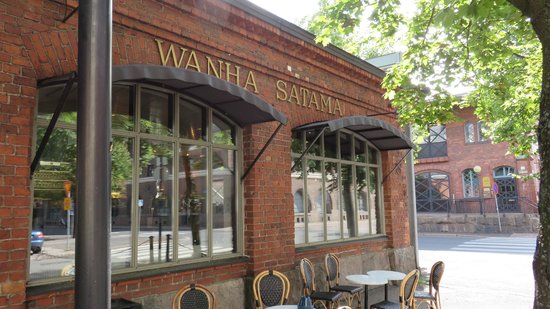
For three days, the University Jyväskylä will host a series of talks, sessions and panels at the “Wanha Satama” (Finnish for “Old Harbour”), – a renovated warehouse for coffee and spices located in the heart of Helsinki and close to the seashore.

Wanha Satama - before: coffee and spices, now: conference about cultural sustainability

As a part of the conference Ph.D Taru Elfving, is curating the “Open Stage” program, which is “a space for posters, art and performances”; this is where our workshop Building Sound Collectives comes into the picture. It will take place on Friday 8th of May, scheduled as a part of the program for the conference.

This conference is an excellent opportunity to continue our work, learning from knowledgeable people, and inviting participants to engage in a practical, hands-on research into what role non-verbal interaction plays and can play in a  collective’s cultural sustainability.

Read more about the conference here.

Join us! Share, like and comment!!

Publishing music as a living eco system

As a member of Barefoot Records, I am fortunate to be part of a vibrant and inspiring environment of excellent improvisers and composers. This is an environment of people, who – as improvisors – see music as something that is susceptible to immediate changes in the surroundings; these are artists that are challenging the mainstream understanding of music, both from within, – in the internal logic of musical forms – and from without, – in the way music is presented and the way it interacts with its audience.

Being part of this collective of musicians, with their steady production of albums and concerts, has given me a strong impulse – and a forum – to question the way music is published and distributed.

The fact is that although in these time we have an ocean of new opportunities to create interaction and context dependency in the digital media, the record industry is still stuck in a linear, closed format when publishing music. Whether we are talking downloads or streaming, the end result is still the same kind of linear, black boxed product that we have seen since the first recording technologies in the beginning of the 20th century.

Since when did we accept the idea about music as a static product, immune to the context in which it is experienced? We want to challenge that! We want to develop a new form of publication which is taking the vibrant liveliness of music, that we know from the concert, and bring it to the everyday experience of music, – in the headphones, the living room, and wherever people choose to listen to music.

This project unfolds in three stages:

  1. A living work
    This is a pilot phase, where the goal is to create a work which, depending on the time, place and other variables at the moment, will sound different every time you listen to it. It is a collaboration between composers and musicians from Barefoot Records.
    The work developed in MaxMSP and published and distributed to the desktop.
    Read about the living album here, and join us in its development
  2. Naked Toe (working title)
    Following the evaluation of feedback from users and creators the project continues in an operational phase, where we develop a series of living works
    This phase opens up  for a number of collaborations where we can curate works by other composers and musicians. It is a platform which also allows for the (re) release of music that has never been suitable for the linear formats – there is a treasure of open form works waiting to find the right format of publishing.
    This phase will involve visual artists and designers, and we can collaborate on releasing works in the form of living sound sculptures.
  3. The big picture
    We want to challenge the way people listen and relate to music. In this phase, the task is to develop an app and / or browser-based platform, where users can experience the live plants and record “live” versions which they can comment and share with other users

The first two phases of the project will unfold within the format of artistic research, and the funding will most likely come from national art funds and private funding .

The third phase will need a good deal of financialisation, and the model for this phase is the tech startup. A lot of funding is possible for this format, and the success of the phase is depending on the results and experiences in the first two steps.

It’s alive!! – a collaborative “living album”

Did you ever wonder why live music is so much more exciting than listening to music in your living room? Isn’t it partly because the music you download from iTunes or stream from Spotify is exactly the same each time you listen to it? No surprises!

Recorded music just keeps repeating the same old patterns not caring about who is listening, when, where and how often. Just like some halfway autistic aunt who babbles about herself for hours, not aware that everyone else is sick and tired of listening to the same stories over and over again.

Barefoot Records is a collective of improvisors and composers, who are very active on the Danish music scene. As a  proud part of this collective, I have engaged in a journey that will explore ways of challenging the way we publish and distribute music.

Read about the project here: Publishing music as a living eco-system

First step in this journey is to develop a “living album”. This is a pilot project, and we – the artists at Barefoot Records – are inviting you to collaborate!

You might have heard about crowdfunding? Would you like to be part of a crowdsourcing experiment? You are hereby invited to take part in a collaboration, where anyone on the Web can pitch in with ideas in a creative effort to break new ground in the way we listen to and conceive of music!!

This is how it works:

  1. The Barefoot artists are recording a series of improvisations. In each take a single musician is improvising freely.
  2. The takes, – let’s call them soundscapes –  are released on soundcloud.com, please visit the set here.
  3. On Soundcloud, you can comment on the soundscapes, in the sound itself. For each comment, we open a small discussion, and we can add links to other comments, thus building conceptual connections between different parts of the soundscapes. Please share your comments about the improvisations, giving special attention to
    1. what images/ambiences/atmospheres/landscapes do the soundscapes evoke? Where are the aesthetic bridges between the soundscapes? Which parts match, and how? This will help us build banks of sounds, that we can combine in different ways, according to the musical imagery they evoke.
    2. how do you perceive the overall forms of the improvisations? If you consider each improvisation as a narrative, what is the form of the story? These analyses will give us some macro-forms to use when programming the generic structural elements of the album.
    3. imagine that you are listening to the final “living album”. The sounds will combine according to the above mentioned banks of sound and the macro-forms, in a way that is dependent on what happens at the specific time and place where you listen. In which way would it make sense for the sounds to interact with your environment? When programming the album, we can play with time, place, and we can connect with the computer’s “sensors”, i.e. camera, microphone, as well as streams of data from the Internet.
  4. After this process of crowdsourcing, of co-creating the collective living work of sound art, composer Casper Hernández Cordes will compile sounds, forms and interaction patterns in a living album, an application, that you can download for free. Every time you open the application on your computer, you will hear new pieces.
  5. The app will enable you to save the pieces, and you are invited to upload them to soundcloud. There, you will comment on the piece, and on the living album, sharing your experiences with the community of co-creators.

How about that? Click here, and you can participate! Join us! Comment! Share! Create!

Top 5 talks at 11th International Conference on Sustainability – from a cultural sustainability perspective

The 11th International Conference on Environmental, Cultural, Economic and Social Sustainability is taking place in Copenhagen, Denmark January  21-23rd 2015. For three days the conference center of Scandic Hotel will be abundant with scholars from all over the world giving sessions about numerous topics.

As a participant I have been working my way through the enormous program, scanning it for sessions that are relevant for those who are interested in cultural sustainability.

These are my top 5:

1) Belonging, Identity, and Sustainable Heritage Development of a Danish Diaspora Community in the American Midwest

The global electronic environment has allowed a network of communities linked to Denmark, each other, and the shared past. Various artifacts that display these linkages will be presented at this poster. Societies that have faced a diaspora can now follow this model of continuous electronic involvement, communication, and re-discovery to maintain identity and heritage.

Time: Thursday January 22nd, 14.10 – 14.55, Plenary

I am curious to go to this session because 1)  it is about a Danish cultural diaspora, seen from a non-Danish perspective. This is relevant for the Danish society, where immigrants are expected to abandon their cultural heritage in order to fit in – ie being “integrated”. 2) It deals with how we can sustain our cultural heritage via new technologies.

Also read: Can social media help us build our collectives?

2) Ontological Pluralism and Education for Sustainability: Indigenizing Higher Education Curriculum

Our aim has been to act on the outcome of our previous research and maintain a Community of Practice approach to challenge academics within the School to embrace ontological pluralism to inform new and innovative approaches to the teaching of sustainability.

Time: Thursday January 23rd, 10.00 – 11.40, Room 2

This session is relevant because it deals with a distributed understanding of knowledge, as something embedded in cultural practice, as something that is negotiable across cultural differences.

 3) Historical Representation and the Crafting of Attitudes toward the Environment: Understanding the Role of History to Affect Sustainability

The promotional literature, actual design, and subsequent histories of suburban subdivisions in Sacramento reveal the striking extent to which suburban developers, real-estate firms, and later suburbanites constructing local histories have employed the language of Sacramento’s early urban boosters, and, ultimately, became a contributing part of the overall booster packaging of a metropolis that has helped shape how many in Sacramento view the environment and, likewise, themselves.

Time: Wednesday January 21st, 14.00 – 15.15, Room 5

This is interesting to me, because it gives us an insight into how cultural patterns ie local narratives of self and belonging are linked with socially constructed, dynamic processes.

4) Creative Aging City: Place-making in Old Neighborhoods by Elderly Communities in Asia

This paper therefore aims to study the place-making efforts by the elderly community, taking cases in Asia [..] to understand how the elderly residents cope with various environmental and artificial constraints in old neighbourhoods, [..] by appropriating them into socially sustainable places for ageing community, collaboratively and creatively.

Time: Wednesday January 21st, 12.30 – 13.45, Room 3

This is interesting because it establishes a link between space, health and community, –  and this is an important connection to make when it comes to creating cultural sustainability.

5)  Weaving: The Mixtec Palm Hat from Anthropology and Design

Some of the implications of this project are the study of cultural and social sustainability, a combination that in the future can contribute to the improvement of artisan economic conditions, and as a consequence, a better relationship between humans and their natural environment, as well as a reduction in cultural heritage loss.

Time: Thursday January 23rd, 12.40 – 13.55, Room 3

This session is relevant because it provides us with insight in the processes at work when it comes to collective production and it’s relation to cultural heritage ie. cultural sustainability ‘classic’.

Luckily none of the sessions above are at the same time!! Are you joining me? Give a comment below

onSustainability_full_rgb

PS: Of course there are many more really interesting presentations. Check out and comment upon my top 19 here.
Building sound collectives – a workshop concept

//
upgesture

So, we want to work with sound as a means of building a culturally sustainable collective, and we want to do it in an open, intuitive, sufficiently challenging, though comfortable way. This workshop is designed for groups of adults and young adults. It is aiming at providing the group with tools and methods for building the collective through non-verbal means.

The workshop is intended to be a supplement to contexts where people are working with new ways of living, towards economical, ecological and social sustainability. This might be in connection with conferences, festivals, theme days in education, or seminars in organisations.

midgesture

Basic info
Name Building Sound Collectives
Duration 1 – 2 hours
Target group Young adults and adults
How many? 12 – 20
Where is it relevant? In organisations, in education, at festivals and events with a focus on sustainability
Location A larger room with free floor space. If outdoors, in a quiet, private place.
Equipment used Computer, audio interface 8 in 8 out. Four microphones. Four (homemade) instruments with (contact) mics. Four smartphones. Wifi. A “magic square” 3×3 meter on the floor marked with adhesive tape. A pair of loudspeakers.
Aims 1) to find the groups “common core gesture”; 2) to develop new gestural expressions from the core gesture 3) to find our way to imitate gesture through sound 4) to create a collective electroacoustic composition
Learning keywords Collaboration, non-verbal communication, other-centeredness, gestural and sound imitation, sharing ideas, improvisation, collective creativity.
The workings

Expressing ourselves in sound is one of our most efficient modalities to reach out to each other, and to try to understand each other’s worlds.  But there is no sound without movement. This is true on a fundamentally physical level. It is also true on what we could call a meta level. When we are  expressing emotional content, we are imitating physical movement with our voices.

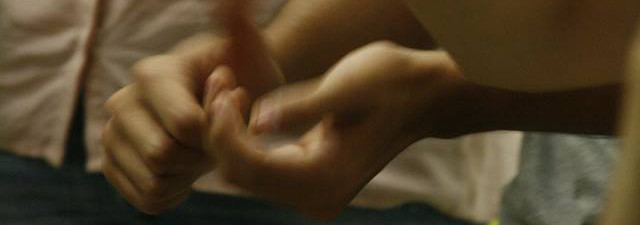
Therefore, we want to start with gesture. We want to explore gesture as something that members of the group are already using as a means of expression in their everyday lives. And we want to experiment with ways of imitating our gestures through sound.

The workshop comprises six parts.

  1. Our first aim is to search for what I would call a common core gestural phrase
    • In pairs. A comes with a gesture. Any gesture. B imitates it and adds a variation. A imitates B’s variation and add another variation.
    • Each pair present one gestural phrase that they liked. The rest of the group imitates.
    • Now everyone moves around in space. Each participant performs the gestural phrase they have selected, and when seeing another participant he/she will try to merge to two gestures.
    • All gestural phrases will eventually merge into one.
    • This is group’s core gestural phrase
  2. Gesture jam.
    • In this part we will improvise in different ways with gesture based on the core gestural phrase. Imitating with other body parts; varying the size of the movements; making supplementary gestures, filling out the “blank spaces”.
    • This way, we develop a common new gestural grammar, and a living library of movements for the group.
  3. Sound on top. This is where we work with imitating gesture through sound
    • in pairs. A performs a gestural phrase from the ‘library’. B imitates with sound.
    • In the whole group, the pairs give samples of their work, showing a gestural phrase and the corresponding sound phrase.  The group imitates the sound phrase, with sound
  4. Sound from the bottom
    • The group records one sound from each of the four homemade instruments. This might be done in a break by some of the participants.
  5. Collective electroacoustic improvisation
    • The group is divided into three groups of four: a gesture group, a voice group, and a remote control group.
    • The gesture group will move around inside and out of the square, using gestures from the collectives’ library.
    • Each member of the sound group will imitate one of the gesture performers with their voices. Each of the four sound group members has a microphone, and their phrases form the previously recorded sounds from the homemade instruments, live.
    • Each of the four members of the remote control group use a smartphone to follow the movements in the magic square of one gesture person.
    • During this improvisation,  in the loudspeakers we will hear the sound of the four homemade instruments
      • formed by the voices of the sound group (intensity and pitch)
      • moving in soundspace according to the position (left – right, back – front) of the sound group members in the magic square
  6. The collective improvisation is recorded. After the collective impro, everyone listen to the recording.
    • New impros can be made. New experiments tried out. New sounds from the homemade instruments used.
    • For each new impro, people switch roles. Ideally, everyone tries all the different roles once.

down

If there are enough people, a possible variation is to have a group of “musicians” adding new sounds from the homemade instruments, according to the movements of the gesture group.

See an example of a street performance using a similar approach, in Cali, Colombia, here.

Follow our page on Facebook.

Is even my mother tongue corrupt?

Improvising with my voice, starting experimenting with singing INTO things in my home; when I starting using a white ceramic bowl, I noticed it had this damping effect, and it felt good;
It made me start thinking: What if our spoken language itself, is corrupt? The core of my search so far has been the spoken language, and I have seen it as a kind of collective bio recorder, a place where we store cultural traits, gesture, movements, and experiences, IN SOUND.
We store them, and are able to retrieve them throughout generations. In this manner, a treasure of valuable cultural knowledge survives through time. And I have seen this heritage as some kind of true, authentic, and …. real testimony. I have seen it as a bulwark against the attacks from the efforts from a centralized and centralizing, atomizing corporate state system. As opposed to the now spoiled relationship between production and culture, … read more in the comments below…
– the loss of a real folklore – spoken language would be the hiding place for a surviving cultural sustainability.

But what if my mother tongue itself has been corrupted as well? What if the prosody of my mother tongue is a bearer of the wounds inflicted by hundreds of years of assaults from unsustainable cultural processes?

The question I used to ask myself was: How can we draw on the sound patterns embedded in our spoken language to (re)build cultural sustainability?

Maybe the question I should ask now is: How can we draw on culturally sustainable patterns/gesture/sounds and embed these in our mother tongue?

We would then cure our spoken language, and provide our future generations with a means – through a healthy spoken language – to resist attacks from the ongoing colonizing efforts it might encounter.

“Digte er kommunikation, og selvom sproget er korrumperet af magten og den almindelige nedslidning, så lever drømmen om at skabe et kunstnerisk „parallelsprog“, der kan sætte verden i bevægelse.
Det fremgår især af det, men også af Christensens romaneksperimenter
Evighedsmaskinen (1964) og Azorno (1967) og af hendes hørespil for radioen.”
http://www.denstoredanske.dk/Dansk_litteraturs_historie/Dansk_litteraturs_historie_5/I_skriftens_verden/Det_er_det_hele_-_Inger_Christensen

These are images and sounds from a street intervention in Cali, Colombia in June 2014 made by composer Casper Hernández Cordes during his time as an artist in residence in Lugar a Dudas.

“The Work and the Play” is build up in two parts:

1) WORK. In this art, a participant is cleaning a 3×3 meter square on the pavement. A group of participants watch the movements of the working person and imitate them on instruments made from trash. For example: the participant holding a bucket makes a sound each time the “worker” puts a foot to the ground.

Sounds from the “players” are being recorded, as individual loops in Fonokolab.

2) PLAY. When the “worker” has finished his/her job, he/she walks slowly, foot by foot, around the square. 

Three to four players now move around in the square, each of them forming a sound by their position in the square.

The 3-4 improvised sound gestures are recorded. 

When the “worker” reaches back to where he/she started, the collective improvisation stops.

And it’s time to invite a new person to do the working!

Find the event page on Facebook: https://www.facebook.com/events/1636561273235682/

The performance was made possible thanks to 

Danish art council logo Lugar a dudas logohttp://www.caminaelrio.com/

Read more about the project here: 

http://champuscolectivo.tumblr.com/acercade

Aquí puedes ver imágenes del evento / exposición en un Lugar Dudas, 05 de julio 2014 “Un Champús Colectivo”

En el trabajo informal encontramos un sin fin de gestos y sonidos que tienden a codificarse y a integrarse en nuestra memoria, creando así comunes denominadores en la sociedad para su reconocimiento.

Champús Colectivo se inicia en la búsqueda de los gestos y sonidos encontrados en el trabajo informal en la ciudad de Cali y en la interpretación de cualquier persona que desee participar. 

Champús Colectivo

Casper Hernández Cordes, Nelson Salazar M, Sara Pachon Pelaez, Juliana Beltran, Diego Alejandro Cardozo, Luis Gomez

http://champuscolectivo.tumblr.com/acercade

Con el apoyo de:

Danish art council logo Lugar a dudas logo