“The garamut have two functions in this society. First, they are used to communicate between people through a code of beats, which enables the Reite to say things such as “the whiteman will come to eat banana in [a particular] hamlet tomorrow afternoon, as long as there is no rain” – this last sentence demands very good skills, but basically everyone is able to hear their own names when called by the slit-gongs. The second functions of the garamut is to “accompany the voices of water-dwelling spirits when the spirits are drawn to the village by men of the cult”[9], in other words to communicate with them. Besides, each spirit “is known by the unique tune of its voice, and by the unique beat which properly accompanies it””
Non-verbal communication and the “voice” of drums Understanding perissological resonators
Our inquiry on how non-human entities are made to speak now leads us to wonder about non-verbal communication. Speech is indeed not the only way to communicate, and alternative media used in rituals may be interesting to look at. Non-verbal communication can go both ways: from humans to non-humans, or from non-humans to humans. Bruno Latour proposed to take some facts as propositions, such as the “drip-drip” of melting glaciers warning about global warming. Pierre Lemonnier now proposes to consider that objects produce non-verbal statements and are great tools of communication.
A non-verbal statement can be defined as “the communication of an idea, position, mood or the like through something other than words”[1]. Tim Ingold insists on the idea that “objects might do what words alone cannot”[2] in the domain of ritual. Rituals indeed enjoy the necessity…
In the beginning of April this spring, I did some career counseling on myself, and as a result of a goal clarification process, I found out that I needed to dig deeper into the field I am working with. I wanted to dedicate more time and energy to investigate what is going on between people, when they are building a group relationship, and specifically what happens on the level of non-verbal interaction in this process.
I decided that the right framework for this kind of process would be …. academia.
Since I graduated with a BA in French and Musicology in 1995, I haven’t been part of the academic environment. Though I have repeatedly considered the option of doing an ‘artistic PhD’, I have basically been reluctant to engage myself with academia.
You know, most of what I am trying to do in my work as a composer is to distance myself as much as possible from the ivory towerness of the artistic world, and get out there and involve all kinds of people in the creative processes, – as a process that stems from, and is directed towards the collective, as opposed to the standard top-down kind of process that would make enlightened fine art products trickle down from the ivory tower to the anonymous crowd of cultural peasants.
So how does it make sense to want to fight my way to the other ivory tower, in the distant, boring, desert like world of academia?
September 2015 I will be starting on my first semester, and I will use this blog as a kind of diary, where I will 1) make sure that I keep my focus, and will not be absorbed in dusty ivory. I want to make sure my mix of curiosity, inclusiveness, no-nonsense, experiments will guide my way through the paper desert. 2) Reflect on the links between the field of study – anthropology with a focus on educational settings – and the focus in this blog, ie building collectives and non-verbal interaction.
Welcome to my student diary!!! Please comment, share, send me your thoughts, and let’s connect here and on other platforms.
“I do not usually feel comfortable with performing“, she said, and I said: “Wow, that’s not what one would have thought, after seeing you today!”
This was our last Barefoot Sound Kitchen session, on a rainy-sunny day – typical for the Danish “summer”. Nine people took part in the workshop, here are some images from the session:
You can listen to all the folk compositions / impros from the Barefoot Sound Kitchen sessions here:
Building on the work of the 2012 Creativity & Critique conference (York) and the 2014 Creativity and Design conference (Copenhagen), the 2016 conference embraces the arts and aesthetics as critical design elements – as inquiry, methodology, development resources, etc. – to explore, feel and express the felt, sensory and emotional aspects of management, leadership and daily organizational life. We encourage participation from researchers, practitioners, educators and organizational development professionals working at the arts and organization nexus in ways that help us engage with the intangible such as:
Feeling organizations
Leading through the arts
The arts in organizational development
Studio pedagogy
The arts as means of inquiry/methodology in research
Aesthetics of organizational change/transformation
Creative processes in organizations
While we have set the theme as “Empowering the intangible”, the Art of Management and Organization conference welcomes submissions and participation from any field engaging with arts and aesthetics in management and organizations. No matter what the submission (streams, exhibitions, installations or performances), be creative, be bold!
Please submit all Stream and event ideas to aomo2016@gmail.com by the 31st July 2015
(To see the video with English subtitles, click the Youtube icon)
This is a very moving and inspiring project. I have seen the video about 10 times, and I find that what I am seeing is something that we need more and more in our time: empathy, creativity, acceptance, trust, and meaning. This is of course a bunch of plus words that can seem a little easy to just put into text, but what can I do? This project is something really authentic, inclusive and respectful of what it means to be a human being.
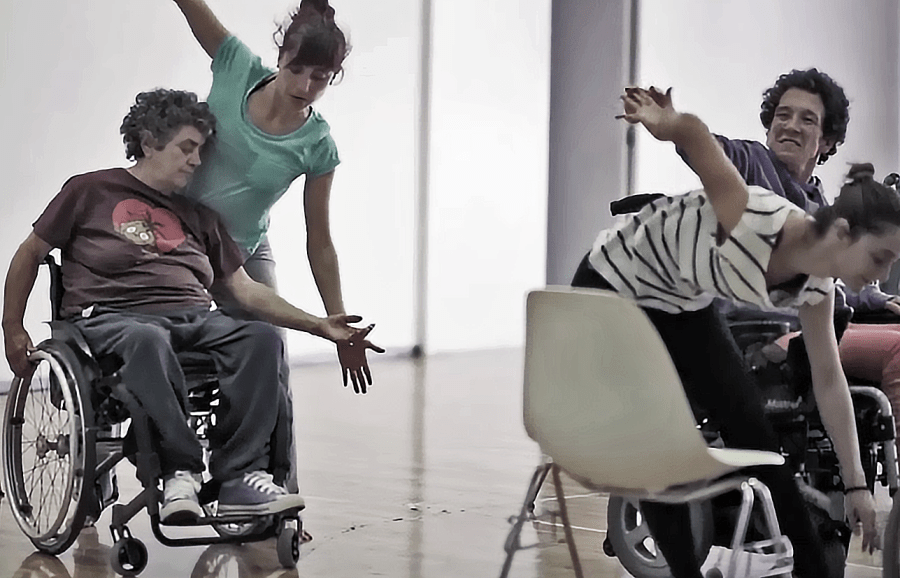
The project Dancing from who we are started in 2013 as a spinoff from the dance association Kon moción, with the aim of expanding the association’s scope to people with chronic illnesses and disabilities.
Dancing from who we are is trying to break down barriers, bring dance to everyone, and discover the dances that are sometimes hidden behind our limitations in order to find languages that bring people together.
In the documentary we hear and see the director of the programme, Becky Siegel and her helpers. As for the participants, we hear the individual perspectives from two of them, a man who suffers from Parkinson, and a woman in a wheelchair. The documentary clearly makes you feel that these people are simply just people, like you and me. That it’s me in the wheelchair, having to face some altered conditions when it comes to the whereabouts of my arms, my legs, my head, my body in time and space.
What leaves me with curiosity after seeing the documentary, is to know more about what impact the project has on the collective. We see that the individual participants seem to have a transformatory experience. But what happens in the group? What happens to the people with whom each participant interact before and after the creative bodily experience this project provides?
In the exercises we are witnessing, there seems to be a huge creativity going on. There is a wealth of ideas being generated and shared. These are cultural patterns, created on the spot, building on the experience, philosophy and energy that each participant brings to the collective. But what happens to these patterns? Are these people building a collective culture together? Are the patterns being stored in the collective and are they building on top of each other, accumulating immaterial wealth to the group? Or are the simply just there in the moment, and then gone?
And lastly: what is the balance of initiative between facilitators and participants? How much influence does the participants have on the format of the activities? Being non-dancers, and being thrown into their specific conditions, do they see themselves as legitimate co-creators, and are they being invited to pitch in?
Dear reader, what do you think? Please comment, share and pitch in with ideas below
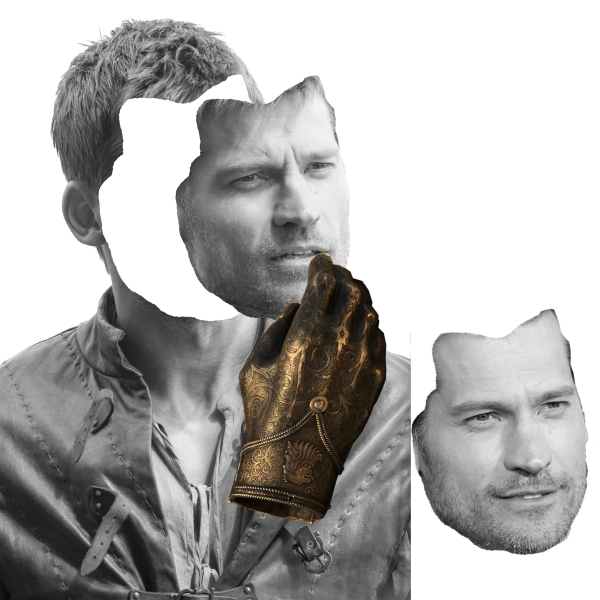
As for Jamie, it seems he has two possible faces. He has a neutral, expressionless face, that he puts on, when he is somehow taken aback (which seems to take a lot). The other – which he puts on here – is this shrewd fox-like smile, which is saying something along the lines: “I know what you are trying to do, and I do have my own thoughts about it, but don’t you think I will reveal them to you. (Ha!)” The fact that the actor behind Jamie Lannister, Nikolaj Coster-Waldau, is a Dane might shed some light this binary facial language.
It is no wonder newcomers to Denmark have such a hard time adjusting to the culture. One thing is the language itself. The phonetics are so complex, that the language is a hobby horse for many linguists around the world. Danish kids seem to learn the Danish words later than other kids growing up with other languages learn their words. In consequence, learning Danish as an adult is a major challenge. On top of that, as I was saying, we have this arbitrary relationship with non-verbal interaction, where we are cautious to let as little as possible slip through.
The Danish language use, the pragmatics of spoken and written language, can be really efficient, when it comes to collaborating, and getting things done. In Danish, we have a rather small vocabulary – maybe because of the work it takes to learn the words – and a single word usually has a very limited range of meanings. Her is here. Der is there. No mistakes. A culture of efficiency, of accountability and of getting things done.
When it comes to emotional content, to person-to-person interaction, it’s another story. It is as if we had a radio jammer implanted in our bodies, that will obstruct the appropriate coding of our inner states and bodily emotions, washing the other person over with a rain of non-verbal white noise.
Danes are experts in reformatting whatever happens inside them into something unrecognizable, when it reaches the outside world. This is a culture of irony, sarcasm, and non-verbal cacophonia.
No wonder that the Danes’ divorce rate is among the highest in the world.
Doran brings out a toast for Tommen, to which Ellaria gloomily reacts by emptying her glass on the floor, sending a defying look to Jamie Lannister, creating in the teenage lovers, Myrcella and Trystane, one of these wtf-moments about the adults being SO embarrassing.
The non-verbal element is of course very strong here, very brutal, very simple, and completely on the symbolic level. Drinking together means: we are in on this together. Refusing to drink is a very strong protest reaction.
I can’t help thinking about the role that consumption plays in our society, in Denmark particularly, it is very strong, at least. Not wanting to share a meal means you can really piss off the host. This is of course particularly accentuated when the reason for not eating or drinking is based on religious, cultural, health related, ethical or political reasons.
This is why I suggest we invent “the social stomach”. This is an implant in the body that includes
a valve in the throat, controlled by our thoughts (or to begin with, an iPhone with the new app “iSwallow”)
a plastic tube, parallel to our gullet
a plastic bag, next to our stomach, and finally
a second valve, in a hidden place, accessible while at the toilet
This way, we wouldn’t have to create these awkward situations, when with the family, where we’d have to remind them for the hundredth time that we don’t eat this or that. We can simply swallow it, and with a big fat smile on our face let the bad, unhealthy, unethical stuff pass through the body without and side effects. Then at an appropriate moment simply going to the bathroom and flush it out. Completely acceptable and legitimate behavior. Or better: find an excuse to get a lonely moment in the kitchen, find a clean tupperware container, drop the completely untouched food there, and place it safely in the fridge. Now that is recycling!!
A positive side effect from the social stomach implant – aside from the extremely beneficial effect on the social balance in our society – is of course that we can do our duty as citizens and consume more and more, without having any impact on the health system. What with our innate digestive system, we can simply use our for what it’s there for: nutrition.
This beautiful sunny Saturday afternoon, I set up Barefoot Sound Kitchen – street kitchen edition, at a place, that could best be described as the bedrock of consumerism in Denmark: The King’s Square, Kongens Nytorv. A place where 95% of the passers-by will have at least one plastic bag with a new pair of shoes, a new shirt or a new dress attached to their arms.
Are these people willing to play? “Can you help us?”, I asked. Most of the – seeing our setup with microphones etc., reacted by taking a hard look on the pavement and hurrying on, with a short remark about being busy. Still, there were a few who were open to be lured into the game. And others who spontaneously threw themselves into the game.
I invited Henrik, a little elderly gentleman to participate. He didn’t consider this to be anything he needed to take part in. He was 90 (!) years old. I would have taken him to be 70. He said he had experienced World War 2. I asked him how that was. He said that he had escaped to Sweden. And had started a brigade. What brigade? I didn’t quite get that. Anyway. Although shy he didn’t shy away from giving a perfectly in tune rendering of “Jeg elsker de grønne lunde”, and old Danish song, through the means of a microphone that converted his thin voice into a fat double bas sound.
Then there was Simon, who took the stage with a storm. He was one of those guys who sell a street paper “Hus Forbi”, a free spirit, enjoying a smoke and a beer (probably not the first, that day). He gave it all he got and tried out all instruments, improvising, singing, yelling, inviting anyone to join us. He said he was crazy about Barefoot Sound Kitchen, and sustained a theory that it would be very popular at parties, and at the pubs. He even thought I could make a lot of money on it. It eas definitely better than karaoke. I said something along the lines that this was an art project ant blabla. Well then make the money on renting out this setup and make your art on the side. You gotta make a living somehow. These were very intelligent words from someone living in the street, and it actually made a lot of sense. Drunk people in general are more willing to play. And Barefoot Sound Kitchen is a fun toy – besides being an art project. What’s the big deal? Who the h.. cares?
I asked about his history, and he told me he had been a fisherman for a number of years. He had been hit by a car. And was unable to work. He had been receiving “help” from welfare, but this had been only humiliating and he had ended up struggling with fits of anxiety. Now he had dropped out of everything. Didn’t get a penny from welfare. No more anxiety, Simon was now a free bird of the streets (as we say in Danish).
Simon gave this paper, Hus Forbi, as a gesture for being part of Barefoot Sound Kitchen. He didn’t accept my offer to pay for it, – even though the audience had given us some money for the performance.
Then there were two boys coming by. One of the wanted to do some rapping:
Three hours in the sunny weather with microphones, and the sounds of piano, drums, saxophone, trumpet and Double bass. Eight to twelve people having taken part in the improvisations, playing with sounds, and maybe working with some of their inhibitions. Maybe some new images that might slip through in their dreams.
There was a lady saying: “This looks so simple, but having to actually use your voice in these microphones it made my heart beat double as fast!”. I guess we all have had this dream: You are standing on a stage, and you are supposed to perform something, maybe a ballet, maybe a solo piano concert. And you are completely unprepared.
A festival is about feasting about celebrating about having fun, together. We musicians and composers in Barefoot Records are working together making concerts that will surprise you, make you wonder and smile.
This summer, we are part of the Copenhagen Jazz Festival for the 6th year in a row, and we are making our on mini-festival – “on the smelly side” of the official program. During the months that precede the festival, we are working hard on making new music for you to enjoy. It is a very challenging process, a process from which you can learn a lot, and this year we would like to invite you to be a part of it!!
Barefoot Sound Kitchen will conquer the streets of Copenhagen in June – July 2015
Composer Casper Hernández Cordes is facilitating three workshops, where you will be guided through a creative process working with sound as a means of expression. We are using sound recorded from the musicians in Barefoot Records, and will explore hitherto unheard combinations of sound. During the workshop we will create some unique composition, that you will be able to listen to and share online, for eternity (or as long as the Internet works, and we don’t forget to renew our online files).
Street Kitchen edition: DIY Street music. Make your own music. Pay yourself or someone else money for it.
“How can we make music? We are not musicians!” you might say. In Barefoot Sound Kitchen you will see that you can take som sounds and mix them together just as well as you can take some ingredients and cook from them.
Barefoot Sound Kitchen – street kitchen edition. Five microphones with a quintette inside, waiting for … YOU!!!
Barefoot Sound Kitchen Street Kitchen:
Four Saturdays in June at 2 – 5 pm on streets and squares.




 Building Sound Collectives