My current artistic research explores the sonic expression of a forest’s metabolism. I’m using specialized microphones to capture the subtle vibrations and sounds produced by living organisms and ecological processes, and then translating these patterns into musical sound. My goal is to create a unique kind of concert experience where the forest itself becomes a musical collaborator.
This involves capturing the often inaudible sounds of life within the forest – the movements of roots, the activities of insects and microorganisms, and the flow of water and air. These expressions, often hidden from human perception, form distinct patterns that can be translated into data and used to generate synthesized sound. This process allows me to give a sonic voice to the trees, soil, and plants.
This research follows a period of exploration into bioelectricity, where I investigated how living organisms express themselves through electrical signals. However, practical considerations and the desire for a more portable setup led me to investigate vibrations and sound as alternative expressions of life.
Finding the Right Tools
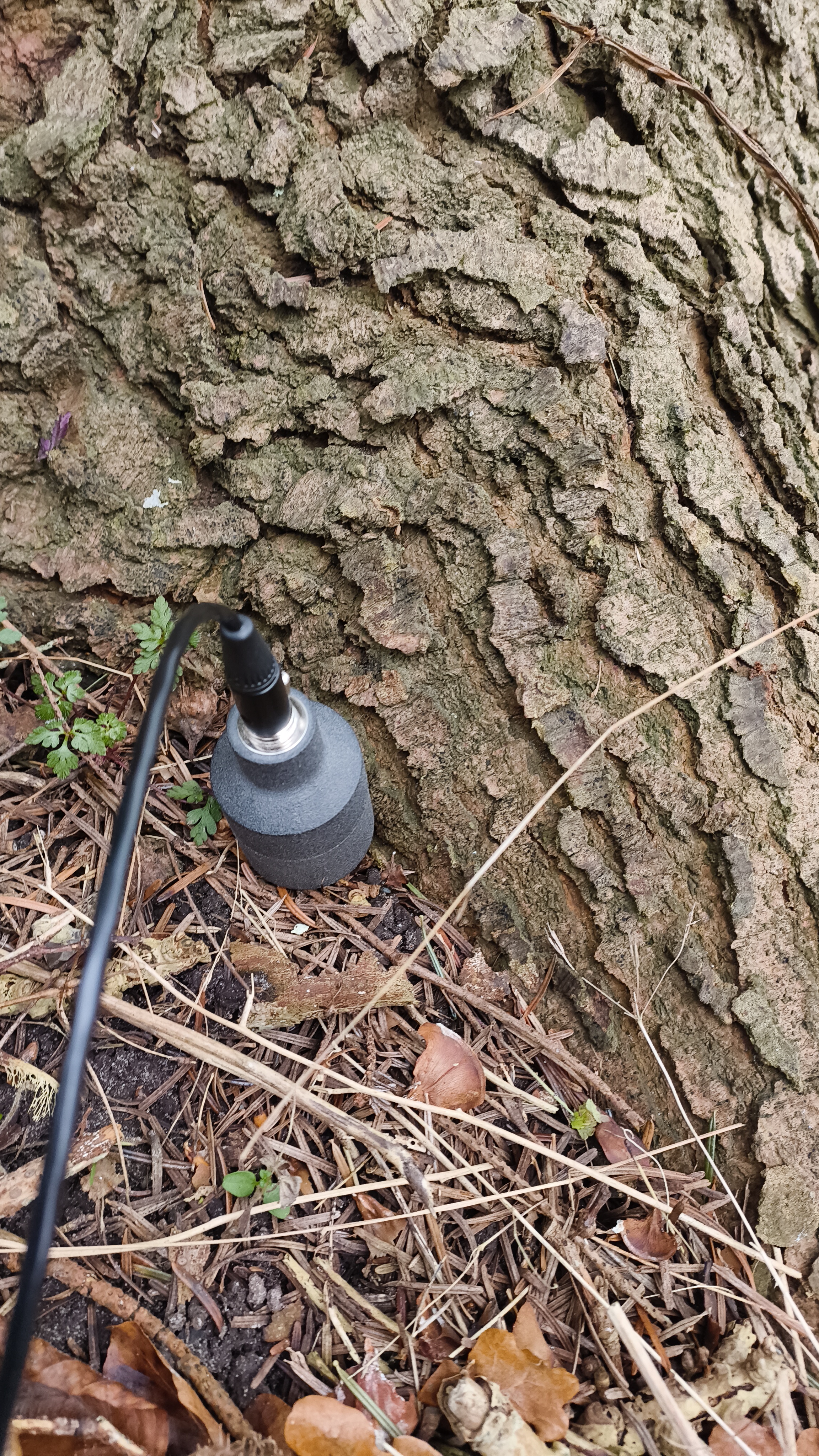
To “listen” to the forest, I needed the right tools. After considering various parameters like humidity and pressure, I focused on capturing the vibrations and sounds of the soil, trees, and plants. This led me to two microphones: the Jez Riley French ‘ECOUTIC’ contact microphone and the Interharmonic ‘GEOPHON.’
Initial tests with the ECOUTIC in my garden proved disappointing. While recording the compost bin and an apple tree, the microphone captured a wide range of ambient sounds, making it difficult to isolate the sounds emanating from the source I was probing.
Hoping for a more focused approach, I switched to the GEOPHON. Unlike the contact-based ECOUTIC, the GEOPHON utilizes a magnet and a coil of copper wire, potentially making it less sensitive to ambient noise. Initial tests in a quiet forest environment were more promising.
Decoding the Sounds of Life
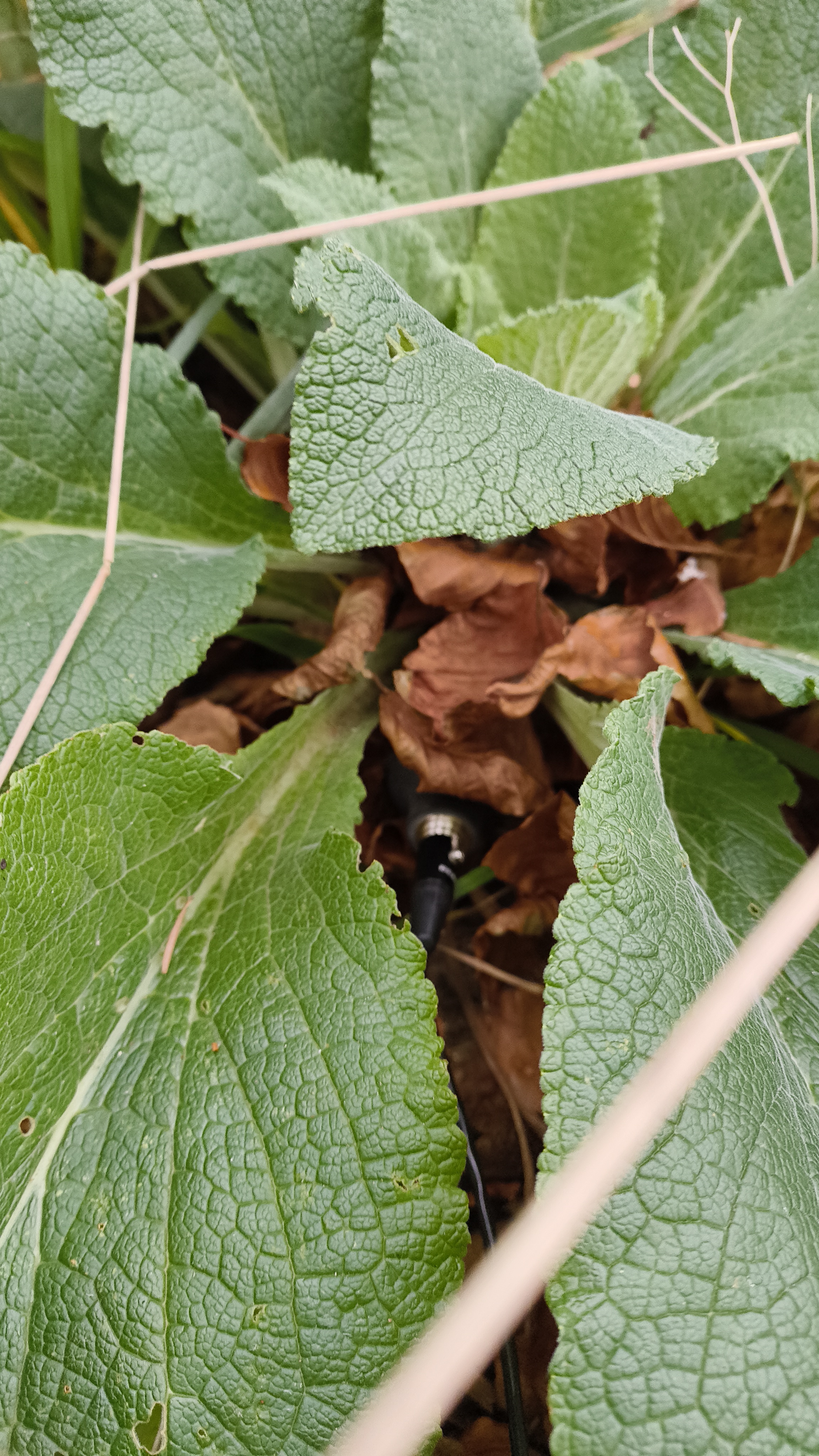
I collected recordings from various sources – trees, soil, plants, mushrooms, and decaying wood. While these sounds were largely unintelligible to human ears, I could perceive distinct differences between the recordings from each location. However, knowing that the GEOPHON captures frequencies below human hearing, I needed a way to analyze and interpret these inaudible sounds.
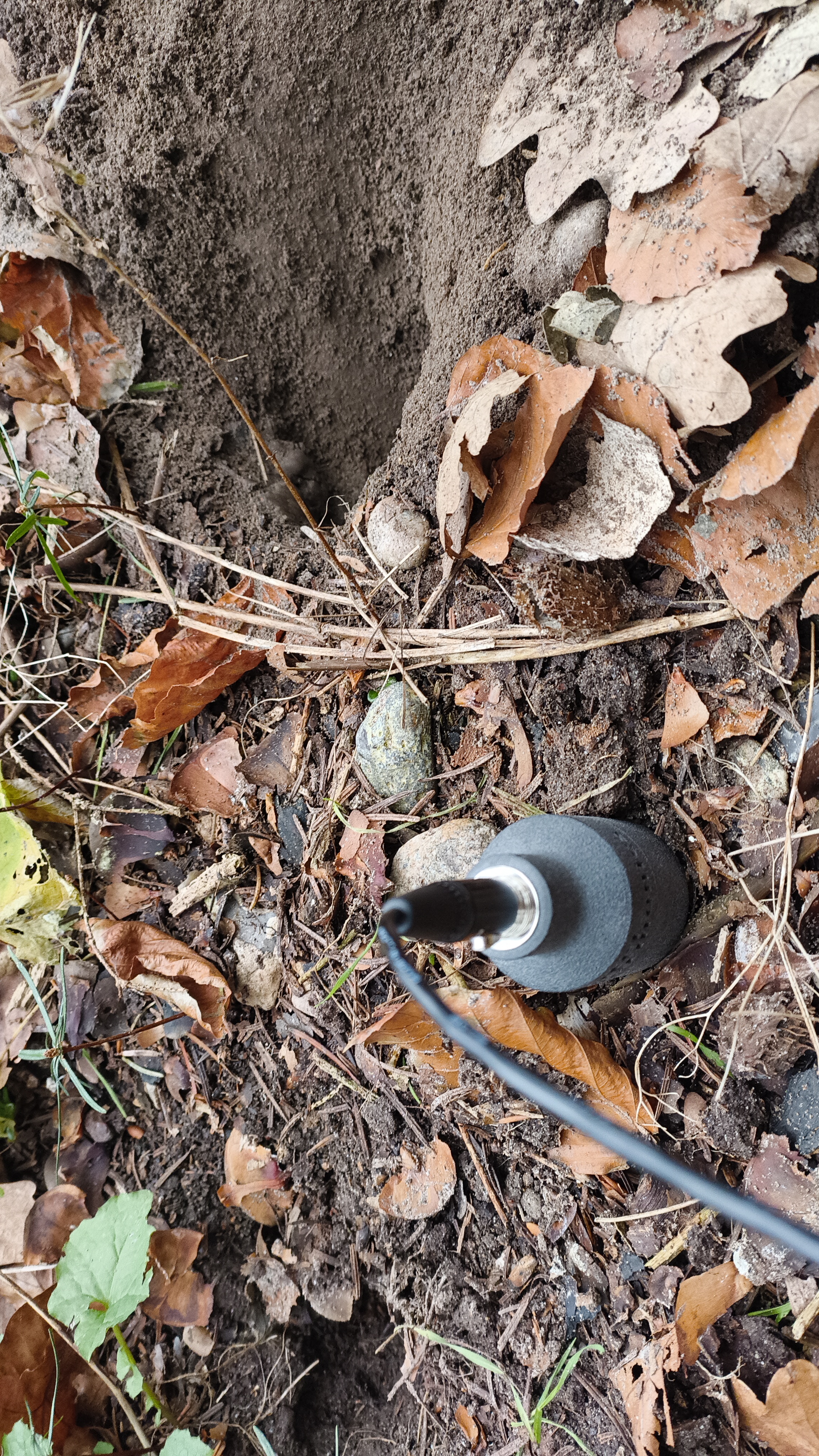

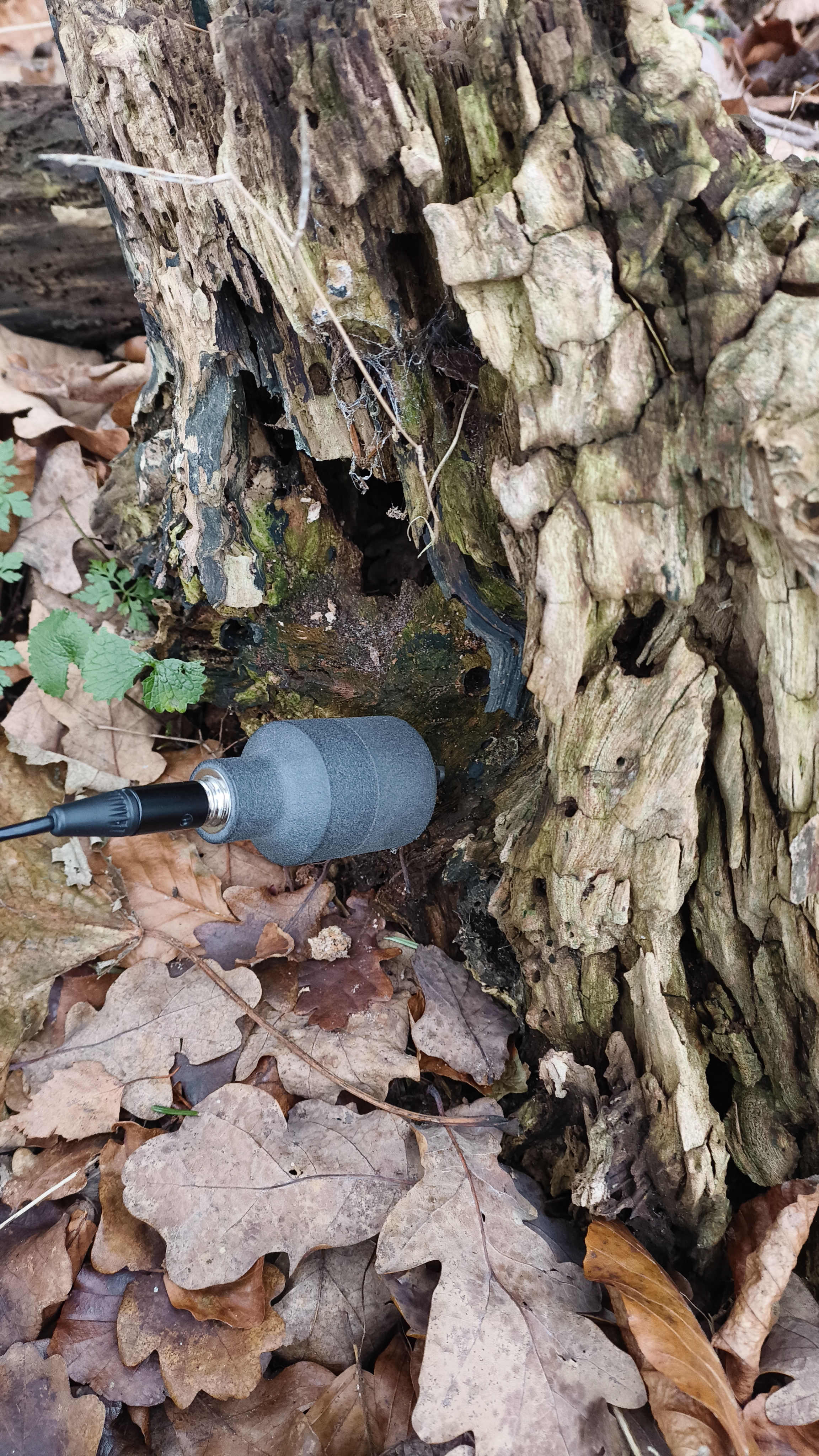

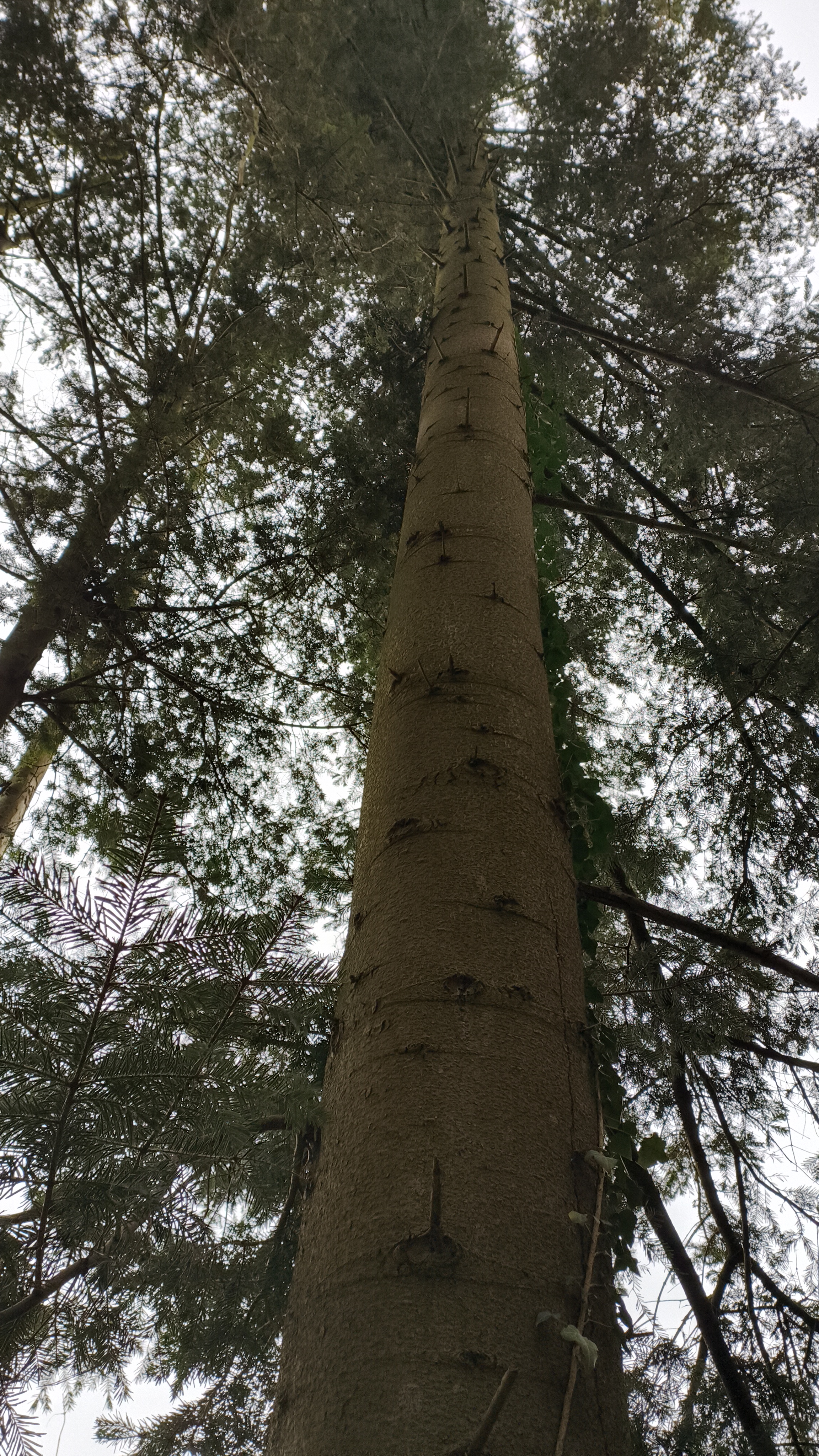

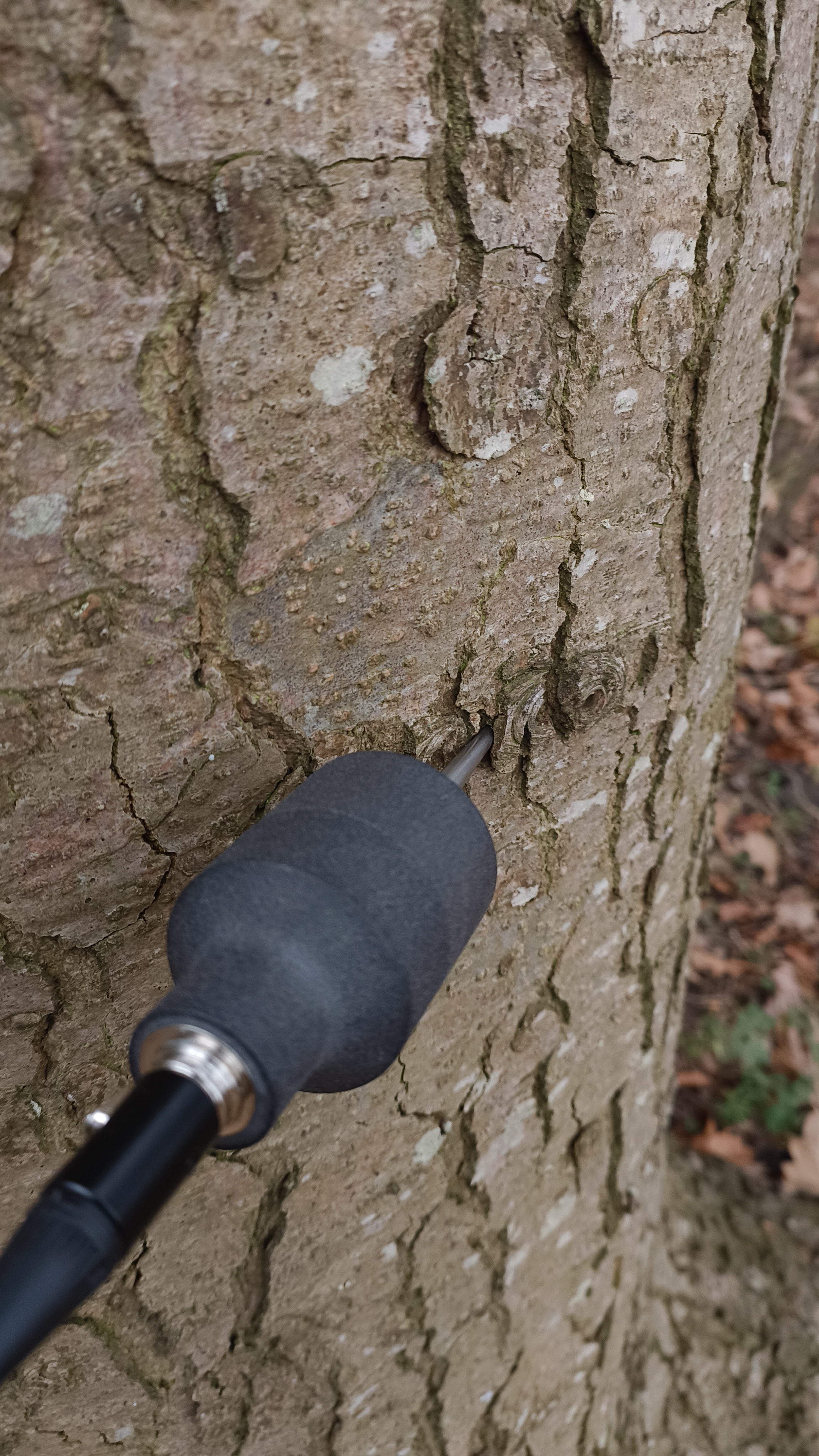
Using MaxMSP software, I’m experimenting with two analysis techniques:
- Amplitude Analysis: I divided the sound spectrum into 10 Hz windows and analyzed the amplitude variations within each window. This created 40 distinct “frequency bands,” each with its own fluctuating amplitude. I then translated these fluctuations into synthesized sound, with each band represented by a sine wave at a specific frequency. The result is a droning sound with a subtly shifting timbre, reflecting the dynamic activity within each frequency band.
- Brightness and Noisiness: Using a MaxMSP object called “Analyzer,” I tracked the brightness and noisiness of the sounds. This provides a stream of data for each parameter, revealing significant differences between the sound sources. I then used these parameters to control the sonification, with brightness influencing the waveform (from sawtooth to sine wave) and noisiness affecting the waveform’s modulation. This creates a dynamic sonic landscape that reflects the unique character of each sound source.
Continuing the Exploration
I’m eager to continue refining my methods and exploring the sonic world of the forest.
This research is ongoing. I’ve created a video showcasing some of my initial analysis and sonification results:
I welcome your feedback and thoughts on this research. Please feel free to share your insights in the comments below.
PS: I’ve used AI to help me write this blogpost
 Building Sound Collectives